By Protopresbyter George Metallinos
Dean of the Athens University School of Theology
1. Christian Worship
Ever since its founding on the Day of the Pentecost, Christianity (as the Church of Christ), was expressed not only as a teaching but also as worship, which held a centremost place in its life. Worship proved to be not only the means by which the Church expressed Her most profound self, but also the par excellence means that shaped the faith and Her life overall. Without being limited to worship alone, the life of the Church is transformed overall into a worship of the Triune God, Who is Her absolute centre and Ηead.
Ecclesiastic worship is comprehended in Christ only, in Whom God is made known (John 1:18). Faith in Christ as our God and Saviour precedes worship of Him. Christ is the One Who differentiates the Christian faith from every other worship. The Christ-centred character of ecclesiastic worship differentiated it radically, not only from the Gentile faith, but also from the Jewish one. (see Hebrews, chapter 9). Whatever Gentile or Jewish ritualistic elements the Church may have assumed, are only secondary in importance and peripheral, and they do not affect Her worship.
An essential element of Christian worship is the esoteric one, i.e., the thanksgiving and glorification of God for His gifts, from the heart. That is why Christian worship was founded on what God did for Man and not what Man can do to please God and placate Him. It is not intended as a religious ritual; it is through worship, that we have the manifestation of the Church as the “Body of Christ”. The sole, true officiator of the Church is Jesus Christ (Hebrews 8:2), Who, through His Person, introduced into History a different kind of priesthood. The terms “priest”, “sacrifice”, “priesthood” in the Epistle to Hebrews – the first liturgical text of the Church – are linked exclusively to Christ, the only authentic High Priest, Who offered and still offers the perfect sacrifice – Himself. His sacrifice in the worship of the Church is bloodless and spiritual, and Christ is, after all, the “offerer and the offered and the recipient” of the sacrifice. It is not the priests of the Church who perform the sacrifice (as is the case in the various religions of the world); priests merely “lend” their hands to Christ, so that He may perform everything (Chrysostom). All of the faithful – with their Baptism and their Chrism – partake of Christ’s priesthood, inasmuch as they “present their bodies as a living sacrifice – a holy one, which is pleasing to God.” (Romans 12:1)
The Worship of the Church constitutes a revelation of the triple mystery of life: the mystery of God, the mystery of Man and the mystery of Creation, as well as the association between the three. In Orthodox Worship, one experiences the “new Era” that “invaded” History with the Incarnation of the Logos of God, and one is now also equipped with the potential for victory over sin, over deterioration and death. Human existence overall places itself under Christ’s authority and it glorifies the Triadic God, the way He is glorified by the angelic Powers in the heavens. (Isaiah 6:1)
In Christian worship, a two-fold movement takes place: Man’s towards God (Who receives our thanksgiving and glorification) and God’s towards Man (who is sanctified by Divine Grace). This is a dialogue between the Creator and His creation; a meeting between Man and “the True One” (John I, 5:20); an offering by an existence to its source, according to the words of the Liturgy: «Ourselves and each other and all of our life let us submit unto Christ the Lord”. The faithful offers thanks to God for his salvation and for God’s continuous gifts, which are “more bounteous than what we asked for”. Man offers God “bread and wine” and he receives “Body and Blood of Christ” in return; he offers up incense, and receives uncreated Grace. The Church’s worship is not offered to God because He is in need of it; this worship is actually a necessity for Man, who receives far more (and far more important things) than whatever he may have to offer.
Worship is ecclesiastic, when it preserves its supernatural and spiritual character and when it liberates Man, thence leading him into the perfect knowledge (“cognition”) of God (Ephesians 4:13, Revelation 4:10, 5:6, etc.); however, its purpose is not to bring heaven down to earth, but to elevate Man and the world, towards the heavens. It gives Man (and Creation overall) the potential to become “baptized” (to die and be resurrected) within Divine Grace.
2. Liturgical Order and Historical Evolution
Ecclesiastic worship has its own order, i.e., the sum of ritual formalities that govern it. “Typikon” (Greek=formal) is the name of the special liturgical manual which provides the outline and the structure of the Church’s worship, according to how the holy Fathers had formulated it over the centuries. With its established “order” and liturgical unity, the Orthodox ideology was preserved successfully - despite all the circumstantial readjustments and local particularities, i.e., the natural flow of events that were observed in the past - thus enriching the liturgical act and also fending off the various cacodoxies and confronting the various heresies. However, the development of ecclesiastic worship took place organically, with an inner order and consistency, without its unity being disrupted. New elements resemble the branches of a tree, which may spread out but still allow for its unimpeded growth. So it is with Orthodoxy, where the Slav-speaking Churches observe the order of the “Holy Monastery of Jerusalem” (of Saint Savvas), while the Hellenic-speaking ones are based –mainly- on the order of the Great Church of Christ (in Constantinople), of the Holy Studite Monastery. This difference in the order observed does not disrupt the unity of Orthodox worship. The liturgical structure is specific, and is common to all Orthodox Churches, as one can discern in an inter-Orthodox Divine Liturgy.
Various liturgical forms had already appeared, as early as ancient Christian times (the “Eastern” form: Alexandrian, Antiochian or Syrian and Byzantine; the “Western” form: African, Roman, Paleo-Hispanic or Mozarabian, Ambrosian, Paleo-Gallic, Celtic, etc.). The expulsion of all the heresies that had arisen during the Church’s historical course had also contributed towards the appearance of local differences, but in a spirit of freedom. This is why the various liturgical forms are useful for discovering and verifying the liturgical evolution of the local Churches, as well as their interaction within the framework of the unity of the Orthodox Faith.
One landmark in the evolution of ecclesiastic worship was the era of Constantine the Great, with the inauguration of Constantinople-New Rome (in 330 A.D.) which opened up new, cosmogonic perspectives. The development of every area of ecclesiastic life (=the work of the holy Fathers) had an organic continuance, without this meaning in the slightest a “falling away from primeval Christianity”. The post-313 victory over idolatry gave birth to a universal feeling and theology of “victory” and triumph, which permeated even the very structures of worship. Its development went hand-in-hand with the Synodic formulation of the Triadic Dogma, the cultivation of theological letters, the organizing of monasticism, the erecting of a multitude of temples etc. With a slow but steady pace, the particularities of worship were minimized and ecumenical forms appeared, based on a stable and unchanging core, which assimilated and united all local particularities. The fruits of these developments are the varying architectural forms of temples, the development of liturgical cycles (daily, weekly, annual), and the addition of new feast-days and services. These developments are chronologically classified as follows: the 4th and 5th centuries are discerned for the vast liturgical flourishing and the profound changes in worship; in the 6th and 7th centuries, the various forms are stabilized; in the 8th and 9th centuries, the final, “Byzantine form” is established, which, after the 14th and 15th centuries (Hesychasm, Symeon of Thessaloniki), led to the liturgical order that continues to apply to this day.
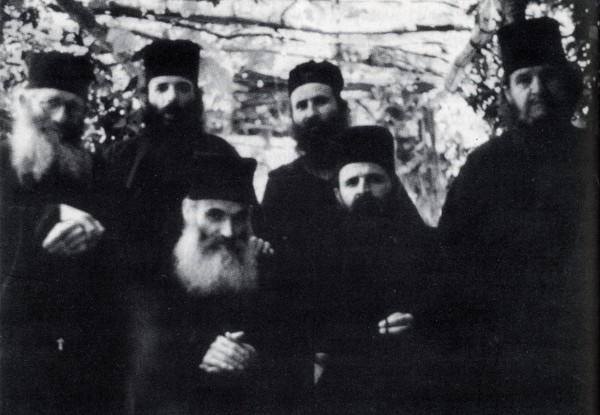
The “Byzantine form” of Ecclesiastic Worship was reached through Monasticism, which comprises the authentic continuation of the ecclesiastic community and the permanent safeguarding of the purity and the witness of ecclesiastic living. Throughout the ages, it was Monasticism that preserved the eschatological conscience, through its fending off of secularization. This is why its impact on the Church’s course has proven to be not only definitive, but also beneficial.
Monasticism incorporated worship into its ascetic labors, putting a special emphasis on prayer and, through the “Prayer”, turned its entire life into worship. Monasticism cultivated and enriched the liturgical act, by offering the Church Her liturgical “order” and practically all of Her hymnographical, musical and artistic wealth.
Following Monasticism’s victory and the end of the Iconomachy issue (9th century), the monastic “form” was passed on to the secular dioceses as well, and this “form” was to eventually prevail throughout the Orthodox Church. The monasteries cultivated the main structural elements of Orthodox worship; also its hymnography (poetry) and its music, and it is in them, that the truth is preserved to this day: that worship is not just “something” in the life of Orthodoxy, but that it is the very center and the source of renovation and sanctification of every aspect of our life.
3. The worshipping community
The Orthodox Church manifests Herself historically as a worshipping community. Even heterodox such as Erich Seeberg (a major Protestant theologian) have called Her “the religion of worship on the ground of Christianity”. During worship, the faithful partakes of his Church’s way of existence, which is referred to as “a feast of the first-born”, “a house of celebrants” who are “eternally jubilating” in an eschatological foretasting of the heavenly kingdom. The Church’s worship was, from the very beginning, a community act; it was an act of the local Church, and not of the faithful as individuals. During worship, the individual becomes a member of the “community in Christ” (in which he enters with his Baptism) and he then partakes of the life of a specific, local community, and not some universal and generalized notion of Christianity. In worship, the ecclesiastic body becomes evident with its local assembly. Even “private” prayer is understood Orthodoxically as something within the ecclesiastic community - as an extension of it. The Divine Eucharist in particular is the Sacrament of the Church as a body, and is also the purpose of the liturgical act.
The Church’s worship unites the faithful, across Time, with all the Saints and the reposed faithful, contemporaneously with the brethren who are presently living “in Christ”. The Church is thus proven in Her worship as “one flock, comprised of people and angels, and one kingdom” (blessed Chrysostom). This unity of the Church, with Christ at the center as Her Head, is portrayed during the “withdrawal” of the “Precious Gifts”, when the distribution of Holy Communion is completed. The Officiator “withdraws” (collects) inside the Holy Chalice the “Lamb Christ” (of Whom both clergy and laity have just partaken), the “portion” dedicated to the Theotokos, the Angels and all the Saints, and the portion for the living and the deceased - this rite normally being performed by the head officiator, the Bishop, who comprises the visible center of the Sacrament (the invisible center being Christ). Thus, the “personal” Body of Christ is joined in an “unconfusable and indivisible” manner to His “communal” (collective) Body – His faithful. Inside the Holy Chalice is “assembled” the community of Faithful, together with Christ and one another. Christ is thus manifested as the absolute center and the Head of the Church; the Church as the Body of Christ, and the faithful – both living and deceased – as members of that Body.
4. “Churchifying” the agents
During worship, the Church transforms the magnitudes of this century into realities of the heavenly kingdom, thus giving a new meaning to their function and their point of reference. One of these magnitudes is: (a) the place. The Church’s worship soon disengaged itself from the Judean Temple and the Synagogue. The Divine Eucharist was initially performed in private quarters (“in the household”) and a congregation of the faithful was called “the household church”. Having developed in a Hellenistic environment, the Church assumed the Hellenic term “ecclesia” (=the summoned ones), which was now used to likewise refer to the congregating of the public (the people), but with Christ now as Her centre and Her Head. The term for “temple” was originally assigned to mean the congregating of the faithful in Christ (John 4:21). Stephen the Deacon would proclaim that: “the Lord on high does not reside in handmade temples” (Acts 7:48). After 313 A.D., the temple was to acquire a special meaning “Christianically” also.
The Temple, as the sacred place of a congregation, was linked to the notion of “heaven on earth”, since the Church’s liturgy is an “ascension” of the faithful to the hyper-celestial Altar. This is what is expressed by a hymn that says: “while standing in the temple of Your glory, in heaven do we think we stand”.
There is a special service dedicated to the consecration of a Temple (The Consecration Service), which expresses the Church’s theology regarding the Temple. The Saints throughout the ages have never ceased to preserve Stephen’s perspective; for example, according to the blessed Chrysostom (†407): “Christ with His coming cleansed all the universe; every place became a place of prayer…”. In other words, the temple may facilitate congregating, but the congregation itself never loses sight of its celestial perspective.
In a “Byzantine” temple, the icon of the Pantocrator (=the “all-governing”) Christ that is positioned inside the central dome, gives the faithful the feeling of being under the paternal supervision of God. One thus becomes aware of certain liturgical contrasts: below-above, earth-heaven, secular-saintly, death-life, endo-cosmic - exo-cosmic, etc. Through the eyes of the Saints - the “theumens” (=those who have attained theosis) - we too can see the uncreated Light of the celestial kingdom, during the liturgy of our Church. During the “inauguration” of a Temple, fragments of holy relics are embedded inside the holy Altar, so that the Church’s worship will forever be referred to the uncreated Divine Grace, which is resident in the relics of the Saints. In this way, all the sacraments and sanctifying acts of the Church have their foundations in the Grace of God, without being dependent on the moral cleanliness of the officiator. Everything linked to the function of the temple is “consecrated” and sanctified: the holy vessels, the holy vestments, the liturgical books, the icons, all of them being rendered “channels” of Divine Grace.
(b) In the Church’s worship, Time is also given a new meaning. The Church’s new perception of Time is confined to the boundaries of Christian soteriology. Time is “churchified”, with the transcending of its “cyclical” self (in Hellenism) and its “linear” self (in Judaism). “Salvation” in the Christian sense is not an escape from Time and the world; it is a victory over the fiendishness and the evil of this world, and the sin dwelling inside it (John 17:15). History and Time are not abolished; they are innovated.
The Church’s liturgical Time does not lose its linearity, because it has a beginning and an end - the “fulfilment of Time” (Galatians 6:4), which was realized with the incarnation of the God Logos. Time was given a beginning by God during Creation, and its “end” is Christ, Who gives a soteriological significance to every moment of Time (“Behold, now is a welcome Time; behold, now is a day of salvation” (Corinthians II, 6:2). With the incarnation of the Logos of God, History now heads towards the End Times, because the “End” is Christ, after Whose incarnation “nothing new” is expected historically, except only the fulfilment of the “end”, with His Second Coming. In worship, Christ is “the One Who will Return”; He is “Emmanuel”, He is “God amongst us” (Matthew 1:23).
Liturgical Time also has a vertical dimension, since Christ and His uncreated Kingdom come “from above”, thus showing us our eternal destination (“let us lift up our hearts”). The Church’s liturgical time is experienced as the continuous presence of salvation. In the Church’s worship, all three temporal dimensions (Past-Present-Future) are contracted into one, perpetual “Present” of the Divine Presence. This is why we have so many references to the Present in our liturgical language: “Christ is born today…”, “today, Christ is baptized in the Jordan…”, “today is Christ suspended on a piece of wood…”. This is not an ordinary, historical remembrance. Liturgically speaking, “remembrance” does not imply any intellectual recall or historical repetition, because the events that are linked to our salvation took place “once”; soteriologically, however, they also apply “for all eternity”. During worship, these events are extended spiritually and are rendered events of the Present, so that every generation of faithful may partake equally of the redemptive Grace that exudes from them. Our worship does not aspire to provoking a Platonic sort of nostalgia, but to generating an awareness of our extending into the Future - into the kingdom of God.
Thus, the worshipping Church re-constitutes the dimensions of Time, incorporating them into the eternal “now” of the Divine Presence. The remembrance of the Past becomes a memory “in Christ”, and the hope for the Future a hope “in Christ”. The Future acquires a hypostasis, just like the “life of the aeon to come” (Hebrews 11:1), when the faithful has reached sainthood – the union with uncreated divine Grace. Liturgically, we refer to a remembrance of the Future, since everything moves in that direction. Every moment of Time is transformed into an “opportunity” (potential) for Salvation. A par excellence “opportunity” is a Feast day, a liturgical “remembrance” of God’s gifts and His philanthropy. A Feast day is an expression of Man’s nostalgia for the eternal, as substantiated in the Saints and the soteriological events being commemorated. The Feasts of the Church are linked, not to some myth (as is the case in idolatrous sacraments), but to actual, historical persons and events. Already by the 1st century, the Feast of Sunday was established as the first day of Creation’s restoration, i.e. the Day of the Resurrection. The Divine Eucharist is the culmination of the Church’s celebration, and every day is an ecclesiastic Feast day, inasmuch as the Divine Liturgy can be performed therein.
(c) Furthermore, ecclesiastic worship also ministers to the mystery of the Logos, in all its aspects. The ecclesiastic and liturgical logos is expressed as benediction-prayer; as the recital of Scriptures; as hymn-singing; as sermons; as the divine Eucharist (the “breaking of bread” – Acts 2:42). These are but different aspects of the same sacrament. In each one of these liturgical expressions, it is the same Logos of God being offered, in a special way each time. The Logos of God summons the members of His Body, so that He can dwell inside it. Without the divine Logos, the sacrament is perceived as a magical medium; without the sacrament, the Logos is transformed into a fleshless dogmatism or a religious ideology.
The Scriptural readings - with the Book of Psalms first – is the offering of the recorded Holy-Spiritual experience of the Prophets and the Apostles, which presupposes the revelation of God (=the Logos of God) within the heart of His Saints. Both the Old and the New Testaments are recited during the ecclesiastic gathering, based on an “order” that was determined by our Holy Fathers. The entire ecclesiastic body participates in the liturgical recital of the Scripture: the Apostolic tract is read by one of the laity, while the Gospel tract is read by the Deacon and the sermon is delivered by the Bishop or the Presbyter (Elder). The Scripture is recited ecclesiastically; not in the usual prosaic or artistic, theatrical manner, but in a “verbodal” (spoken-singing) manner, or in other words, half-chanted. This testifies that the Holy Bible is not just any man-written book; it is God’s perpetual message through His Saints, during the congregation of His faithful. In the Church, the Gospel is sacred and is bestowed special honour; it is placed atop the holy Altar, it is honoured with prostrations, it is incensed, and the people are blessed with it. The priests’ “entry” into the Sanctum with the Gospel is a declaration of the resurrected Christ’s presence among us. The sermon, as the interpretation and the consolidation of the Scriptural word, renders the Scriptural message a contemporary one to the liturgical congregation. The liturgical sermon focuses not on “how the gospel events happened”, but “where they lead us”. The Holy Bible is interpreted by the Church in the Church, in direct association with Christ and the Saints, because it is only with the enlightenment of the Holy Spirit that it can be comprehended and interpreted.
However, the liturgical logos-word is also articulated as the congregation’s response to God, in the form of benedictions and hymns; “Euchography” and “Hymnography” are not only the heart of ecclesiastic worship; they are also Byzantium/Romania’s most significant literary creation. The hymnals’ poetic form provides immense potential, inasmuch as it is the most effective medium for the ritual requirements of the ecclesiastic body, which experiences and confesses its faith “by weaving words (logos) out of melody, for the Logos”. The Church’s hymnography becomes Her “unsilencable voice”, which confesses Her faith in a continuous and blessed song of Orthodoxy.
(d) In ecclesiastic worship, Art is also “churchified”, in all its forms. The only art form that the Church did not accept was sculpture, because of its obviously earthen character. In worship, art becomes a theological language, ministering to the Eucharist experience of divine-human communion. Liturgical art has beauty, order, rhythm, melody... however, these elements are rendered functional-beneficial, in the service of the body. The aesthetics of liturgical art are spiritual and do not aspire to impress, given that they are not directed at the physical senses, since this art form strives to reveal “the divine and uncreated beauty of Christ’s virtues”. This is why products of ecclesiastic art are known to be miracle-working (for example the holy Icons); it is because they too partake of the uncreated divine glory (Grace), thus proving their participation in the Uncreated.
Ecclesiastic worship’s art is so “beauteous”, that it in fact fulfils its spiritual purpose: the ministering to the faith. This is why it is Orthodoxy’s steadfast requirement, that liturgical art preserve its “sameness in essence” with the dogma, with the faith that it ministers to: the attaining of an uninterrupted fulfilment of its spiritual mission.
There is a difference between ecclesiastic-liturgical art and religious art. The former portrays the event of Salvation, the way it historically took place, as well as the collective acceptance of it by the ecclesiastic body. Religious art, on the other hand, is an expression of the artist’s personal approach to the mystery. That is why it is not liturgical. A certain correlation to this would be a comparison between “demotic” (colloquial) poetry and its classical form. As in everything else in worship, the stamp of the monastic world – the more traditional part of the ecclesiastic community – is also very apparent in all the creations of ecclesiastic art.
5. Liturgical theology
Faith - not only as the ecclesiastic ideology and one’s fidelity to the Saviour Christ but as a teaching also - is a fundamental and inviolable prerequisite of ecclesiastic worship. It is the motive power of the worshipping faithful, expressed by external acts and moves that comprise its ritual. Worship materializes faith and renders it a group event, while it simultaneously preserves and augments it, thus helping one to delve deeper into it.
Orthodox worship is Trinity-centred in its topics and its structure. Its strength and its hope spring from the Triadic God. The Church liturgically offers up “glory to the Father, and the Son, and to the Holy Spirit”.
The Eucharist “anaphora” (referral) is addressed to God the Father. The Son is also the recipient of the offered sacrifice, given that He is “of the same essence” and co-enthroned with the Father, and He is the central axis of that sacrifice as well. He is “the offerer and the offered and the recipient” during the Divine Eucharist. Ecclesiastic worship is the continuation of Christ’s redemptive work, and it incorporates the Mystery of Divine Providence. Christ is the “ecclesiast” (“churchifier”) Who gathers us unto His Body and the faithful are the “churchified” who participate in His worship and are recipients of His glory. Those who receive Holy Communion “worthily” (Corinthians II, 3:16) prove to be a temple of Christ, and the mystery of Faith is officiated inside their hearts.
But ecclesiastic worship is just as equally Spirit-centred, because the Holy Spirit is also present during worship, the way that the luminous mist was present when it “overshadowed” the Disciples and the entire Mount during the Transfiguration (Matthew 17:5). Orthodoxy’s true worship is the Holy Spirit’s prayer-rousing energy inside the heart of the faithful, as is the case with the Saints, who are the true worshippers of God because they are participants of the celestial worship. The entireness of worship is the work of the Holy Spirit, Who “holds together the entire establishment of the Church”. The prayer: “Thou Heavenly King, the Paraclete, the Spirit of Truth….” is the one that inducts us into every Service.
In divine worship, a “communion with the Holy Spirit” takes place. Everything is governed by the sanctifying power of the Paraclete. At the peak moment of the Sacrament, we beseech the Holy Spirit to “come upon us” (the officiators) and upon the “holy gifts” (the bread and the wine), as well as upon “all of the people”, and to perform the “spiritual sacrifice”, by transforming the offered gifts into Body and Blood of Christ and uniting all the participants into one body.
The Church’s worship stands out for its “traditionality”. This is the most dynamic carrier of ecclesiastic tradition. “Tradition” in the Church is the perpetuation of the Christian mode of existence; it is life in the Holy Spirit, which can lead to the Church’s true purpose: Man’s theosis and the sanctification of Creation. The truly faithful person will persist in those elements that comprise the genuine ecclesiastic stance. That is what Faith is basically all about: for one to remain faithful and unswerving towards the will of God and the Tradition of the Saints. The criterion for the genuineness of ecclesiastic worship is its degree of “traditionality”. This also contributes towards the unity of local churches, both contemporaneously and across Time.
The liturgical texts provide the liturgical theology, which constitutes a pristine expression of the ecclesiastic dogma. That is why worship becomes “a school for piety” that teaches the faith, with the support of the media of art, and especially iconography - that “most eloquent book” of the Church, as Saint John the Damascene had said. Orthodox worship throughout the ages has shaped the mentality of the faithful, as one can see from certain church-loving personalities such as the heroic General Makryannis or the pious author Alex. Papadiamantis. A person’s association with worship is an indicator of his ecclesiastic demeanour.
It therefore stands to reason that one can speak of an Orthodox and a non-Orthodox worship, because the Orthodox element underlying worship is not composed of faceless structures; it is the faith that is being materialized by these structures. Ever since ancient times, one’s confession of faith was linked directly to worship. Worship remains the sermon of truth throughout the ages, as personified by the Saints and the “remembrance” of the redemptive events found in the Old and the New Testaments. However, beyond being the sermon of faith, ecclesiastic worship also contributes towards its own defence, by fending off heretic fallacies. It is already a known fact that ecclesiastic theology is usually formulated as a response to heretic provocations. This is evidenced by the feast-days and the special church services dedicated to Holy Fathers and Ecumenical Synods. Vespers and Matins provide us with the theology of every single feast-day, in lieu of a theological arsenal for the faithful. The observant faithful becomes, for all intents and purposes, a theologian of the Church.
6. The Liturgy
The Divine Liturgy is the centre of ecclesiastic worship in whole, culminating in the Divine Eucharist, the centre of Orthodox life, experience and conscience. According to fr. Al. Schmemann, a major liturgiologist of our time, “the Divine Liturgy can be regarded as a journey or a course that eventually leads us to our final destination, during which course every stage is equally important.” This course begins, from the moment that the faithful leave their homes to go to the liturgical assembly. The assembling of the body is the first and fundamental act that introduces the faithful into the new world that God instituted in History, i.e., the Church. The faithful assemble inside the temple, in order to participate in the Liturgy, along with all of the Saints and their brethren in Christ – both the living and the departed. This act culminates in the “Minor Entrance”, during which all of the assembly, along with the Bishop, journey towards the celestial sacrificial altar.
One cannot be perceived a Christian, outside the liturgical assembly. In times of persecutions, the Christians placed themselves in great danger in order to participate in the assemblies of the local communities. The expression “I belong to the Church” means: I participate in Her liturgical assemblies; because it is through them, that the “here and now” of the ecclesiastic body manifests itself. It is the synagogé (=the gathering together) of the people of God - in which even the catechumens and the repentant also participate to a certain extent - and not just an “elite” of chosen ones. The faithful constantly deposit their sinfulness before the Divine Love, so that it may be transformed, through repentance, into sanctity. That is why the Holy Fathers recommend frequent participation in the liturgical assemblies; because that is how “the powers of Satan are undone ..... in the congruence of the faith” (Saint Ignatius the ‘God-bearer’, †107).
In the first part of the Liturgy, up to the end of the Scriptural recitations, it was the custom for the catechumens to also participate, which is why it was called the “Liturgy of the Catechumens”. The remaining part is called the “Liturgy of the Faithful”, and it contains the Sacrament of the Divine Eucharist, whose main characteristic is the sacrifice. The Eucharist is a “theophany” (a “manifestation” of God), and as such, it transforms all of Creation into a theophany. With the Divine Eucharist, the Church offers Her “bloodless” sacrifice. The faithful offer God’s gifts (Thine own, of Thine own, do we offer Thee), confessing their unworthiness and their spiritual poverty ( “..... for we have done nothing good on earth .....”). The only reciprocation to God’s gifts that we can offer is to consciously subject ourselves to Divine Love.
The Divine Eucharist is not a prayer or a ritual like other services. It is the mystery of Christ’s actual presence in the midst of His praying Church. It is firstly Christ’s Eucharist (=thanksgiving), then it becomes ours also, because, without ceasing to be “co-seated with the Father on high”, Christ is also simultaneously “here below, invisibly, with us”. According to the blessed Chrysostom, “Whensoever (the faithful) receives Holy Communion with a clean conscience, he is performing Pascha (Easter) ... There is nothing more in the Sacrament performed for Pascha, than in the Sacrament now being performed”. By partaking of Christ’s “humanity” (=human nature), which is distinctly and indivisibly joined to His Godhood, the faithful receives inside him all of Christ and becomes joined to Him in this way.
In the Divine Eucharist, the ecclesiastic body experiences a perpetuated Pentecost. Pentecost, Eucharist and Synod in the life of the Church are all linked to the actual presence of Christ in the Holy Spirit. This is what our liturgical language also expresses; we speak of “spiritual mysteries”, “spiritual sacrifice”, “worship in the spirit”, “spiritual table”, “spiritual body”, “spiritual food and drink”, etc. Everything becomes spiritual during the Divine Liturgy, not in the sense of a certain idealizing or immaterializing on our part, but on account of the actual presence of the Holy Spirit therein.
Above all, however, the Divine Eucharist becomes the sacrament of unification of the Church. Those participating in it become “ONE” in Christ (Galatians 3:28), through the unity of their hearts (“in one voice and one heart ....”). That is what the Apostle Paul teaches in his Epistle I to Corinthians (10:15-17). The one ecclesiastic body relates therein to the Eucharist bread: “For we, the many, are one bread, one body”. This is why it is such a contradiction, when all of the faithful do not receive Holy Communion, even though all of them have heard the Eucharist-thanksgiving prayers in preparation of Holy Communion...
Holy Communion transmits Christ’s life into each member, so that it may live in Christ, together with all the other members. Saint Simeon the New Theologian sees this union with Christ as a lifting of Man’s solitude: “For the one participating in the divine and deifying graces is in no way alone, but with You, my Christ, the three-sunned light, which lights the entire world ...” . With Holy Communion, the individuals become members of the Lord’s Body and thereafter, individual survival “mutates” into a communion of life. Ever since the first centuries, the very existence of the Liturgy of the Pre-Sanctified (Gifts) verifies the need to participate in the Divine Eucharist. Naturally, none of the above occurs through any kind of automation, but only when the participants live the life of an ecclesiastic body. That is why “he who eats and drinks unworthily, is eating and drinking of a crime unto himself” (Corinthians I, 11:29).
During the Divine Liturgy, the Church is literally lifted to the heavens, partaking of the death, the Resurrection and the Ascension of Christ and living Her own “ascension” into the heavenly realm. “And You have not abstained from doing everything, until You have lifted us all to heaven and bestowed us with Your future kingdom ...”, we confess during the Liturgy. The Liturgy becomes the Paschal gathering of all those who encounter the Lord and enter His kingdom. We do not move along Platonic forms, by seeking perfection in a certain “beginning”; instead, we seek it in the eschatological, in the fulfillment of that which is evolving within Time, through to the final outcome of the existence of the faithful-to-Christ person. The worship of the Church is thus directed by the historical past of Divine Providence, to the confirmed-in-Christ future. During the Divine Liturgy, even Christ’s Second Coming is referred to as an event of the past!! “In remembrance [….] of all that came to pass for us: of the Cross, of the Tomb, of the third-day Resurrection, of the ascension to heaven, of the second and glorious re-Coming…” is what we confess, prior to the sanctification of the Precious Gifts.
To underrate the liturgical congregation is to cloud its eschatological character. Besides, with the proliferation of Eucharist congregations in a multitude of parishes, in chapels, in monasteries, etc. and the absence of the Bishop – the head of the gathering of every local Church – the term “congregation” has lost its true meaning. Only the joyous character of the Liturgy now testifies towards its eschatological atmosphere, to the point where it could even be regarded as inconsistent with fasting. During the period of Great Lent, a period of strict fasting, no Divine Liturgies are performed on weekdays, only the Liturgy of the pre-sanctified Gifts. The Divine Liturgy is not one of the many means of sanctification for the “fortification” of Man; it is the Sacrament of the Church, which transposes the faithful into the future age. Church and Eucharist are inter-embraced.
7. The sanctification of the entire world
The objective of ecclesiastic worship is the sanctification of the entire world. Man’s life is sanctified, but so is the environment that surrounds him. Within the boundaries of worship, Man is projected in Christ as the master and the king of Creation, who is called upon to refer himself, along with Creation, to the Creator – the source of their existence and sanctification.
a) The sanctification of Time: The liturgical year is the transcending “in Christ” of the “calendar year” and the transformation of the calendar into a feast-day almanac. With Her celebrations and Her services, the Church sanctifies and transforms the year of our daily lives, by unifying and orienting it towards the kingdom of God. Liturgically speaking, Time ceases to be a simple, natural framework, inasmuch as it is transformed into a point of reference used for determining the content of worship. This is evidenced by the terminology used: “Matins” (=morning), “Vespers” (=evening), “Midnight”, “Hours”, etc.. From the liturgiological aspect, the organizing of the annual cycle on the basis of time periods (day, week, year), with an analogous organizing of one’s very life, is called the “Annual Liturgy” .
The liturgical year “baptizes” Man’s entire life into the worship of the Church. The repetition of the feast-days every year renews the catechesis of the faithful and it gives a special meaning to the customary (Greek) wishes: “and next year, also”, or, “for many more years” – wishes that refer to new opportunities for learning. The liturgical year is linked to the Church’s cycle of feast-days, whose basic structural element is festivity. There is a cycle of “mobile” feast-days with Easter at its centre, and a cycle of “immobile” feast days, with the Epiphany and Christmas at its centre. The periods of the Triodion and the Pentecostarion belong to the former cycle, having received their names from the respective liturgical books that predominate therein.
The Triodion period is a sectioned one, just as the human body is sectioned: the first four weeks can be regarded as the body’s extremes; the body itself is the Great Lenten period, and the Holy Week of Easter is the head. Hymns, readings and rituals all comprise a spiritual preparation for one’s participation in the Holy Week and the Resurrection. From Easter Day, the period of the Pentecostarion begins. Easter and Pentecost were already feast-days of the pre-Constantine order, and albeit Hebrew in origin, they now had a Christian content. Christ and His Passion are what differentiated the Christian from the Jewish Passover-Pascha, which had now become a symbol of the new life; of the divine kingdom. The coming of the Holy Spirit during the Pentecost inaugurated the new century.
The cycle of immobile feast-days was organized with the day of the Epiphany at its centre (6th January), a date that originally also commemorated the Birth of Christ. The separation of the two celebrations for historical and theological reasons was effected around the middle of the 4th century. With Christmas as their basis, the other, Magisterial feast-days (Circumcision, Baptism, Reception, Transfiguration) were each put in their respective place. But the Theotokos also comprises a “liturgical sacrament”. The feast-days relating to the Holy Mother (Birth, Reception, Annunciation, Dormition, etc.) are all linked to the Magisterial feast-days, expressing the same sacrament. The celebrating of the memory of Saints is an extension of the liturgical honour bestowed on the Theotokos. What seems odd for some people however is that the Church “celebrates” by honouring the memory – that is, the dormition – of Her children and not their birth. We Orthodox Christians do not celebrate our birthdays; we celebrate on the day of commemoration of the Saint whose name we bear. In Christian terms, a “birthday” is the day of one’s ‘dormition’, i.e., the day that one is born into eternity. The Saints embody the “common life” and are projected as the leaders of mankind, in its course for making man real. Our nation’s association with the Saints – with the Most Holy Mother at the head – is apparent in the two-fold festivity that is performed in their memory, both inside the temple with the Holy Altar at the centre, and outside the temple, with thesecular table at the centre. The book of the lives of Saints is a cherished article for the people, as it is seen as a “hoarding” of the Church’s historical memory and a guideline for the faithful. The course of the faithful is shaped, “along with all the Saints”.
The liturgical organizing of Time in its micro-temporal dimension is analyzed in the weekly cycle of services and the day-to-evening services. The weekly cycle is composed of two parts: the Saturday-Sunday cycle and the five-day cycle. Each day of the week is dedicated to the memory of a certain soteriological event or a certain Saint; Sunday is dedicated to the Resurrection of Christ; Monday to the Angels; Tuesday to Saint John the Baptist; Wednesday and Friday are respectively linked to Judas’ betrayal and Christ’s Crucifixion (which is why these are two days of fasting); on Friday, the Church also commemorates the presence of the Holy Mother by the Cross; Thursday is dedicated to the Apostles and Saint Nicholas; and Saturday is dedicated to the deceased.
The weekly cycle was organized on the basis of Sunday (Greek=Kyriaké), the first celebration –historically- to be set down by the Church. Being directly related to the Lord (Greek=Kyrios) Jesus Christ (Cor.I, 12:3), it represents a confession of faith unto Him. Being also related to the “eighth day”, it was linked to the Divine Eucharist as a permanent and immobile day for its commemoration. The Sunday “day of rest” – which was imposed by Constantine the Great in 324 A.D. – did not relate Sunday with the Sabbath, but instead portrayed itself as the transcending of the Sabbath. Sunday is “the first of the Sabbaths (=the first day of every week), the Queen and the Mistress”, we chant. The Sabbath reflects the natural life of the world, whereas Sunday represents the eschatological day of entry into the new aeon.
The day-to-evening services include the following: The 24-hour cycle begins with Vespers (see Genesis 1: “and it became evening, and it became morning….”) and its services coincide with the ancient division of Time (evening, midnight, dawn, third, sixth, ninth hours). The services are: the “Esperinos” (Vespers = of the day’s end) or “Lychnikon” (=of the lamp), the Major and Minor “Apodeipnon” (=after the evening meal); the “Mesonyktikon” (=of midnight); the “Orthros” (=of dawn) – the most extensive and theologically opulent service, and the “Ores” (=Hours), which are the 1st, the 3rd, the 6th and the 9th, in commemoration of the major moments affecting our salvation (the Crucifixion, the Death of Christ, the descent of the Holy Spirit).
But, while all of ecclesiastic worship was indissolubly interwoven with natural Time, the Divine Liturgy remained beyond Time and its confinements. Thus, it does not belong to the cycle of day-to-evening services, nor are any of the other services regarded as preparation for it. That is why it can be performed at any time – morning, noon or night – as the par excellence celebration and festivity of the Church.
b) The sanctification of life: The epicenter of the sanctifying function of the Church is Man. From the moment of his birth into this world and his spiritual re-birth in the Church, through to the last moment of his presence in this lifetime, ecclesiastic worship constantly provides Man with opportunities for “ecclesiasm” and continuous rebirth. The catholicity of the spiritual and everyday caring of the Church for Her faithful is evident in the liturgical book “Major Book of Benedictions”. Its very structure and its texts embody the objective of the Church, which is the “complete” incorporation of Man in the ecclesiastic body, the struggle for victory over the devil, the demonic powers of the world and sin, and the confronting of everyday problems and needs. The wealth and the variety of the benedictions and the Services of the book of Benedictions is indicative of the love and the concern of Orthodoxy for the personal and the social life of the faithful; for the cycles of his life, and his more common and everyday labours.
The Church sanctifies Man from the moment of his birth, giving Her blessing to the new mother and the newborn child, preparing the latter to be eventually received into Her bosom. After all, the sanctification of the family begins from the Sacrament of Marriage. On the 8th day, the infant receives its name with a special liturgical act, and its personal “otherness” is thus confirmed – something that is afterwards proven by its incorporation in the ecclesiastic body. On the 40th day, the infant is “led to” the temple to be “churchified”, to begin its ecclesiastic life, which corresponds to the commencement of adult catechesis.
After this spiritual preparation, Baptism follows; this is the entry into the body of Christ, which gives Man the possibility of living the life of Christ and of constantly receiving His Grace. Infant baptism, familiar since Christian antiquity, can be comprehended only in the cases of pious parents and godparents - in other words, of a Christian background – and cannot be imposed by any legislation. Through Baptism, the “neophyte” is inducted into a specific community – the local Church – by participating in the ethos and the way of existence of the Church. The more perfect this induction is, the more consistently will his Christian status evolve.
But the faithful is called upon to augment the gift that he received through his baptism, by orienting his life in a Christ-centered manner. Thus, after “nature” (=soul and body) has died and risen (=immersion) in the baptismal font, the human persona is also sanctified through the sacrament of Chrismation which functions as the personal Pentecost of the faithful, so that through his spiritual labor, he will become a “temple” of God and his life a veritable Liturgy. The sacrament of Repentance (Confession) provides the opportunity for a continuous transcending of sin and the transforming of death into life.
Furthermore, the Church blesses the “paths” that the faithful voluntarily choose for their perfection: either marriage (in Christ), or monastic living. Both are “sacraments of love”, with a direct referral to Christ. Marriage, when preserved within the framework of a life in Christ, leads to the transcendence of the flesh and to one’s perfect delivery unto Christ, thenceforth coinciding with monastic ascesis. In this way, the sacrament of marriage reveals the truth of the Church without being used to serve conventional expediencies of everyday living. Wherever marriage is perceived simply as a moralistic adjustment or a “legal transaction”, “political” marriage is preferred, which may be a legal act, but it is nevertheless a marriage that is not spiritually “equivalent” to the ecclesiastic one, which is a sacrament of Grace.
Furthermore, ecclesiastic worship provides sanctifying acts for every moment of one’s life. In fact, through them, it proves that it is not a “spiritualist” (abstractly spiritual) affair, or a “religious” affair, because the sanctification it provides also constitutes a proposal for confronting the everyday problems of each person. In one of the Matins Prayers, we ask God to grant man His “terrestrial and celestial gifts”.
There are blessings even for instances in life that seem trite and insignificant, such as (for example) “for a child’s haircut”, “for when a child leaves to learn the sacred texts”, “for ill-natured children”, etc.. Other blessings refer to the intake of food, the various “vocations” and works of the faithful (eg, travels) as well as “professions”; inter-personal relations are blessed, so that there will be justice, peace and love; God’s Grace is requested for man’s tribulations, for his illnesses, his mental health and his psychosomatic passions. An important place in the worship of the Church is given to death: the cessation of the body’s collaboration with the soul, until the moment of the “common resurrection”. The Church does not overlook this supreme existential event of life; in fact, She stands near the person from the moment that death makes its appearance. She confesses the near-death person and offers him Holy Communion; She inters his body, which has now been delivered to mortification and corruption, sending off the soul to its last journey and beseeching Christ to receive His child, who has abandoned the world with the hope of acquiring “eternal life”. The funeral service is one of the tenderest and touching texts in ecclesiastic worship….
In parallel to the above, the church offers prayers for various moments of public life: serious circumstances and disasters, dangers, malfunctions in public life, both in the micro-society of the village or the town, as well as the macro-community of the homeland and the nation. The relative prayer material refers to national anniversaries, the structures of civil life, education, the armed forces, public health… This incomparable liturgical wealth remains broadly unknown and so we remain ignorant of all those elements that can give meaning to our lives.
c) The sanctification of material creation: Creation, both liturgically and theologically, is the broader territory provided for man’s fulfillment; it is the framework of his everyday life – especially in rural communities, where this is perceived more profoundly. Man’s association with Creation constitutes a special theme of ecclesiastic worship and it unfolds during special services that prove the ecclesiastic acknowledgement of material creation (bread), which was assumed by Christ’s human nature and which is constantly transformed into the “flesh” of Christ during the Divine Eucharist.
Our liturgical act blesses and sanctifies water, wine, sustenance, living and working quarters, flora, fauna, natural phenomena (wind, thunder, rain, earthquake, etc.), for the protection, finally, and the salvation of man. During worship, the faithful offers the Creator’s gifts - in lieu of his giving thanks - so that they might be “baptized” in Divine Grace and be returned to the offerers, for their own sanctification and preservation. During the Divine Liturgy, “one could say that a march, a parade of the whole world towards the Holy Altar is taking place” (fr. John Zizioulas, Metropolitan of Pergamus). This negates every notion of an opposition between the natural and the supernatural, since the creation being offered to God (bread and wine) becomes the carrier of the Uncreated (Grace) and sanctifies the participants.
The God-centeredness of existence is inspired by the theology of such texts. Through nature, man is referred to the Creator, by comprehending the world as a gift of the Creator, learning to use Creation eucharistically (with gratitide) and acquiring the empirical certainty that the issue is not “what does man eat”, but with what presuppositions he eats something, given that sanctified nature co-sanctifies man also. Thus, the faithful learns to become an “officiator” of Creation, in a “cosmic liturgy” that is officiated by the Saints. The Saints, with their imperishable and miracle-working relics, reveal the destination of Creation, which are its sanctification and its incorruptibility. Each faithful is invited to our worship, so that he can be wholly sanctified; so that he is will be enabled to co-sanctify Creation along with him, through his association with it.
8. Worship and spiritual life
The course towards theosis (deification) is attained through the induction of one’s whole existence into the body of Christ, with a lifestyle that will allow the uninterrupted collaboration of Man with the Grace of God. The main constituent of this lifestyle is ascesis, as a permanent struggle of man. This is what is meant by the words of Christ, that: “the kingdom of heaven is violable, and violators seize it” (Matthew 11:12). Ascesis is a continuous course of repentance, by which the faithful becomes the recipient of the Grace of God, without which, his existence is deadened. On the contrary, with ascesis, our revolutionary nature is deadened, only to regain its God-centeredness.
However, the ascetic endeavors of the faithful do not have a moralistic character; that is, they do not aspire to improving one’s character and behaviors, but to enable the participating in the celebration and the rejoicing of the ecclesiastic body. That is why it generates in the faithful a sense of unspoken joy, refuting every artificial (pharisaic) frowning and faked gloom, which are nothing more than manneristic form of pietism. Christian ascesis is a voluntary participating in an obedience to Christ and the Saints for the mortification of our personal will and its eventual alignment with the will of Christ (Philip. 2:5).
Orthodoxy’s piety, however, is liturgical in nature. This is why ascesis is perceived as being supplementary to liturgical life. Ecclesiastic worship is festive in its ethos. Ascesis is the foretasting of joy through partaking of the Church’s festivity, but it is also a preparation of the faithful for their entry into this spiritual celebration. It is the path for one’s return to the “natural condition” (the authenticity of human existence), so that the passage to the “hyper-natural” (where Worship elevates us to) may be made possible. Besides, that which is sought in worship –according to the blessed Chrysostom – is “a sedate soul, an aroused intellect, a humble heart, a strengthened mind, a cleansed conscience”.
The spiritual progress, which the faithful attains through his personal ascesis, is “churchified” during worship; it is incorporated in the body of Christ, and from being a “personal” event, it becomes an ecclesiastic one – in other words, a social one. If individuality does not become “churchified”, it cannot be saved. Outside the body of Christ, not only can there be no salvation, but even the most perfect of virtues remains nothing more than a “woman’s unclean rag” (Isaiah 64:6), in other words, something chokingly filthy. Worship renders the faithful’s life a life “in Christ”. Ascesis provides this possibility, since the person who is governed by his passions cannot truly glorify God. In ascesis, a “cleansed heart” is the objective. (Psalm 50:12), because it is only ‘in a cleansed heart” that man can possibly see God (Matthew 5:8), thus attaining the purpose of his existence.
This is what the resurrectional hymn by saint John the Damascene expresses: “Let us cleanse ourselves of our senses, and we shall have sight of the inapproachable light of the Resurrection: Christ Himself, ablaze…” Through the Divine Eucharist, worship leads us into theosis (deification), provided however that there is a cleanliness of heart and a transformation of our senses, from physical to spiritual ones. If worship, therefore, is the entrance to the heavenly kingdom, ascesis is the road to the kingdom. Worship defines and reveals the purpose of our existence; ascesis collaborates towards the realization of this purpose.
9. The Liturgy after the Liturgy
Ecclesiastic worship is the “Time-Space” in which the Christian ethos is shaped. During worship, the faithful rediscovers the proper meaning of a moral lifestyle, which cannot be shaped on the basis of a certain juridical relationship with God, but through the metamorphosis and the renovation of Creation and Man, in Christ. The Christian ethos is a liturgical one and it springs from one’s personal relationship with the Lord of the Church, Who offers Himself voluntarily “for the nourishment of the entire world”. This relationship, with its triple reference (Man-God-World) is realized during worship, according to the words of the Apostle Paul: “For, if you have also risen in Christ […] make dead your limbs on earth […] divesting yourselves of the old self […] and putting on the new …” (i.e.: So, if you have been resurrected along with Christ….then deaden everything earthen that is inside you…. rejecting the old persona and donning the new one) (Colossians 3:1). This is the continuous “baptism” of the faithful within the new life of the mystery of faith.
In the Church’s worship, a person’s entire life is re-defined, now becoming Christ-centered. “Now everything is filled with light…” The faithful, having been flooded by this light, are invited to become a spiritual river – one that flows from the Holy Altar to irrigate the world salvifically. Ecclesiastic worship thus substantiates that which constitutes the Church’s offer in History. It does not provide any code of moral behavior or a system of moral rules; only a life and a society that can function as “yeast” that will leaven the world with its sanctifying presence, beginning from the micro-society. Participation in worship – if it is genuine – is a participation in the death of self-seeking and individualistic demands and a resurrection into the “in-Christ” reality, which is the purpose of the Church. The eschatological conscience that is inspired by Orthodox worship is oriented towards eschatological behaviors, by transcending the danger of secularization and any other compromises and configurations.
It is therefore understood that any alienation from the liturgical experience will, beyond other things, alter one’s beliefs and decompose one’s life, by transforming the ecclesiastic BEING into various anti-Christian substitutes (moralism, pietism, ritualism, etc.). Besides, we must not forget that the community ethos of Hellenism’s Orthodoxy and the free-spirited stance during the oppressive period of slavery had been shaped within Church worship: the only assembling of the population that never fell into decline. And this is a real blessing, thanks to which, by the Grace of God, in our difficult times, both our People and our Youth are once again finding the path that leads to the Church and Her worship.
At the end of the Divine Liturgy (this was its ancient ending), the Officiator would say to the laity: “Let us depart in peace”. This was not merely a formal announcement of the ending of a “religious duty”, but a motivational expression to relay the light of divine peace into the darkness of our world. The Church and Her Worship exist for the world – for its salvation. The Liturgy of the Church prepares the exit of the faithful into the world, both for testimony of the “Grandeurs of God”, as well as for the missionary calling for salvation in Christ. Christ’s sacrifice and His Resurrection, mysteries that are perpetually ever-present and experienced during worship, perpetually irrigate the world in a salvific manner. The faithful are those channels of Divine Grace that lead to the parched land of our societies – through which channels the “Light of Christ” can “shine on everyone” – shed its light on everything!
Bibliographical Notes:
fr. G.D.Metallinos, The theological witness of Ecclesiastic Worship, Athens 19962.
Chr. Yannaras, The Freedom of the Ethos, Athens 19792.
fr. John Zizioulas (Metropolitan of Pergamus), Creation as thanksgiving. A theological approach to the problem of ecology, Athens 1992.
fr. John Zizioulas (Metropolitan of Pergamus), Eucharist and Kingdom of God, Synaxis, vol.49 (1994) – 51 (1994).
Evangelos G. Theodorou, Liturgical Lessons, Athens, 1986.
fr. Al. Schmemann, Liturgical rebirth and the Orthodox Church (Greek transl. by N. Christodoulou), Larnaca, Cyprus, 1989.
fr. Al. Schmemann, The Church in Prayer – An Introduction to Liturgical Theology (Greek transl. by D. Tzerpos), Athens 1991.
P. N. Trembelas, The Principles and the character of Christian Worship, Athens 19932.
fr. Vlassis Feidas, see “Ecclesiastic History”, vol. Α’ – Β’ Athens 1992 and 1994,
Hans-Joachim Schultz, The Byzantine Liturgy – A testimony of faith and symbolic expression Η Βυζαντινή Λειτουργία–Μαρτυρίa πίστεως και συμβολική έκφραση (Greek transl. by D. Tzerpos), Athens 1998.http://www.oodegr.com/oode/orthod/genika/latreia1.htm

.jpg)